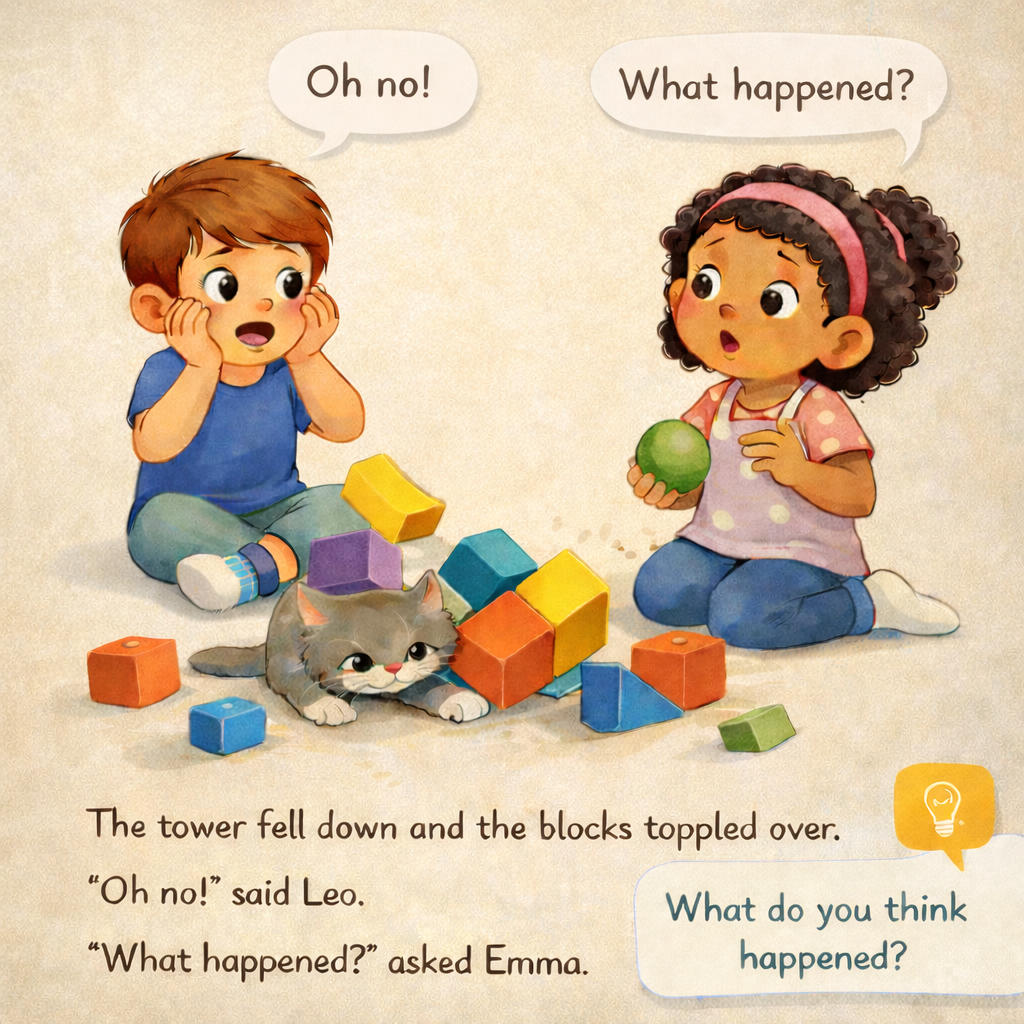
When We Ask: A study on writing a children's book which aids in learning.
This series aims to enable parents with a diverse set of visual and verbal learning books that gently encourage perspective growth around ages three through six.
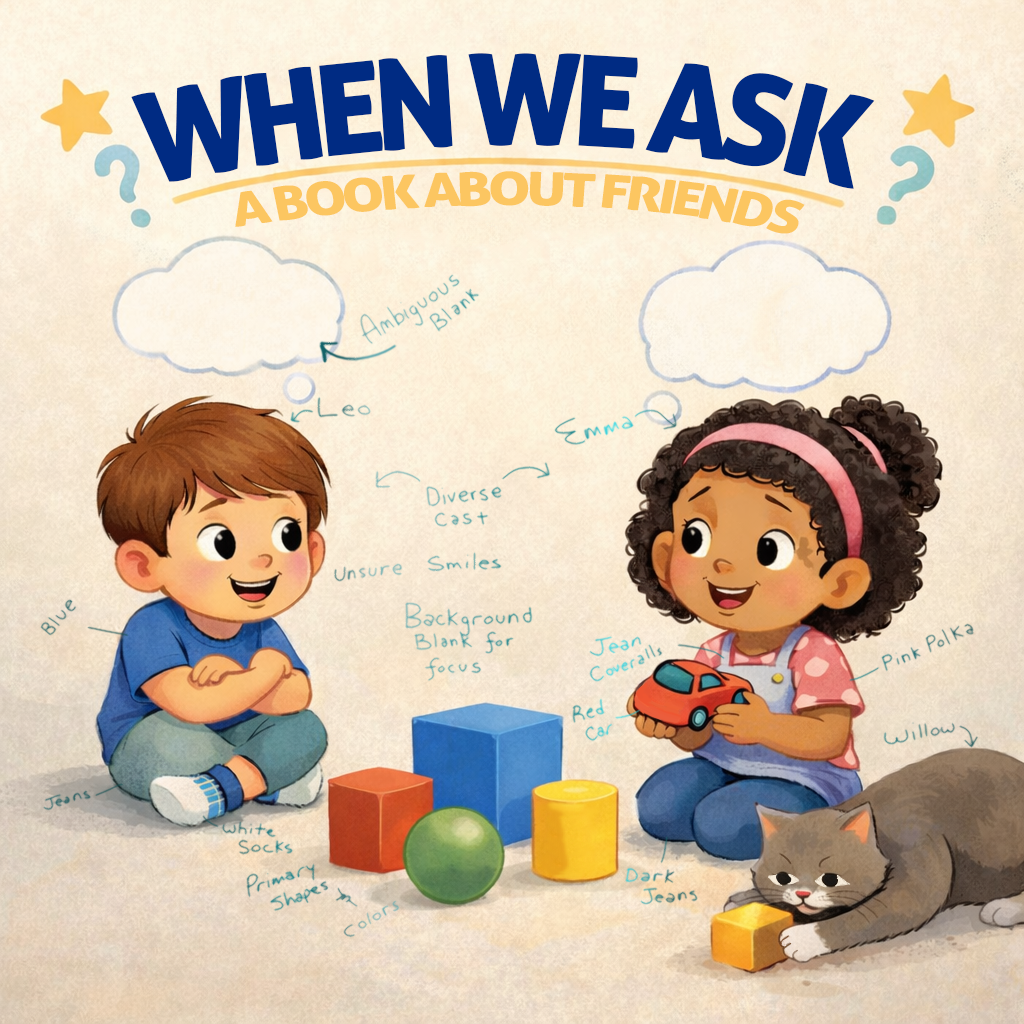
Highlights
- Perspective-taking / theory of mind (what someone else thinks, knows, wants, feels)
- Emotion understanding (why someone feels that way)
- Thought vs reality (someone can believe something that is wrong)
- Back-and-forth conversation about stories (not passive listening)
Research
- By around 3, children are building core social-emotional and conversation skills (joining play, back-and-forth exchanges, talking about pictures/books). CDC
- By 4-5, many children improve in understanding others’ perspectives, including that people can hold different beliefs or be mistaken (a major theory-of-mind shift). CE
- Storybook discussions that explicitly focus on beliefs and emotions can improve preschoolers’ false-belief understanding (a core perspective-taking skill). PMC
- Parents’ use of cognitive state verbs during picture-book reading (think, know, remember, guess) predicts later understanding of mental states. PubMed
Concepts
Guidelines
- Very clear facial expressions
- One social problem per story
- Repetition (“How does ___ feel now?”)
- Predictable structure
Book One
Ages Three-Four
- Simple emotions (happy, sad, mad, scared)
- Visible causes (“She is sad because the block tower fell.”)
- Desires/preferences (“He wanted the red cup.”)
- Turn-taking and noticing others (friend joins play, sharing, helping)
- CDC also emphasizes back-and-forth conversation and asking/answering simple questions about pictures. CDC
Book Two
Ages Four-Five
- Different viewpoints (“Mia thinks… but Ben knows…”)
- Pretend play / role perspective (teacher, helper, superhero) -- useful for perspective shifts
- Emotion + reason (“He feels embarrassed because…”)
- Simple misunderstandings (not yet complex deception)
- CDC milestones include pretend play, comforting others, and story sequencing. CDC
Book Three
Ages Five-Six
- Two characters with conflicting interpretations
- Mixed feelings (“excited and nervous”)
- Rules/turns/fairness situations
- Story retell with multiple events
- “What did each person know at that moment?”
- CDC’s age-5 milestones support longer back-and-forths, story retell, answering book questions, and turn-taking. CDC
Core Principals
- Build the story around a social misunderstanding
-
- Character A sees something
- Character B sees only part of it
- They interpret it differently
- Feeling mismatch happens
- Clarification + repair
- Reflection (“Ohhh, you thought…”)
- This naturally creates “mind-reading” moments without lecturing. (This aligns with theory-of-mind training approaches that discuss characters’ beliefs/emotions.) PMC
-
(PMC) Use verbs like:
-
think
-
know
-
guess
-
remember
-
forget
-
wonder
-
hope
-
feel
-
- (PMC) "Thought vs. Reality" (Particularly valuable ages four-six)
- “Luca thought the toy was in the box, but it was under the couch.”
- “Nia guessed Grandma was upset, but Grandma was just concentrating."
- Write the book so adults can pause and ask:
-
- “What do you think he thinks happened?”
- “Why does she feel that way?”
- “What might happen next?”
- “What would you do?”
- CDC and Harvard both support back-and-forth, responsive interaction; dialogic reading evidence supports interactive reading as the active ingredient. (CDC)
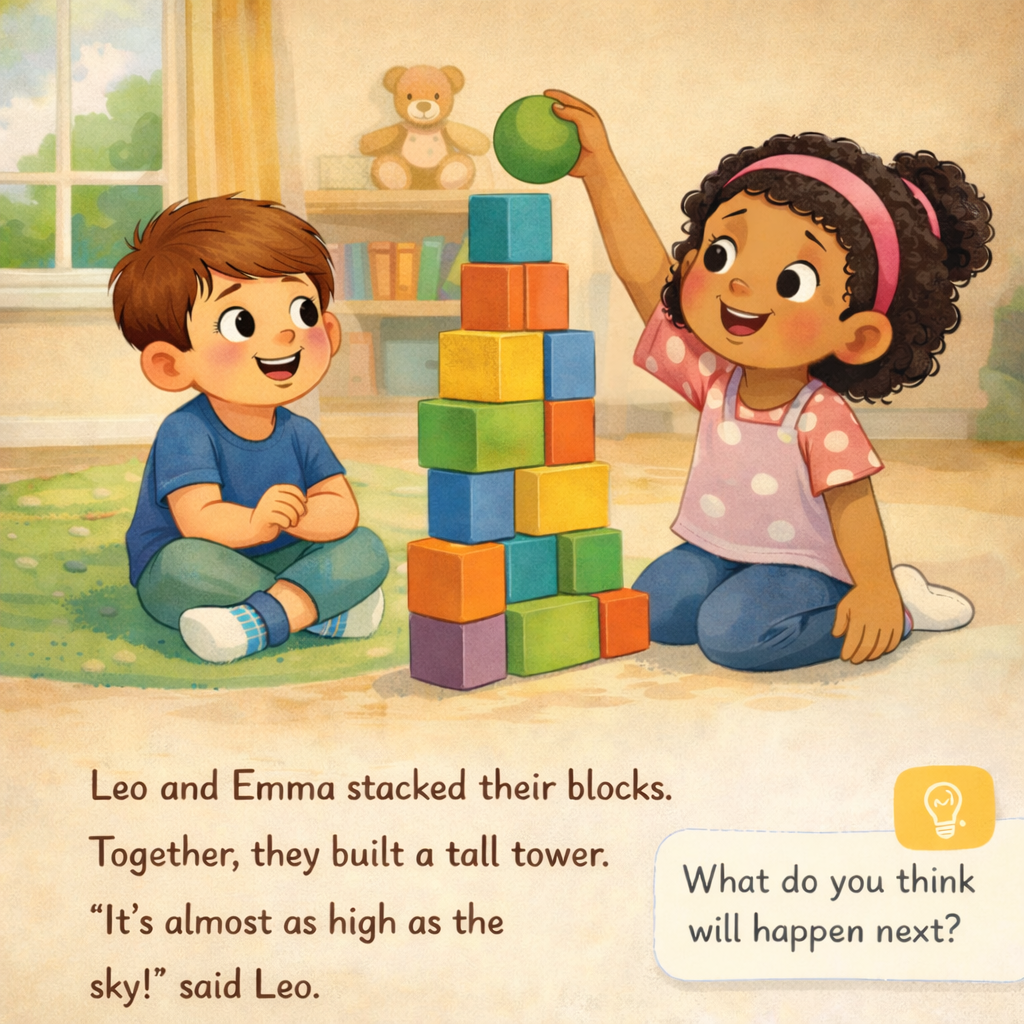
Outline
- 24-32 pages total
- 10-14 story spreads
- 1 main conflict
- 2-3 recurring perspective prompts
- Strong visual storytelling (faces, gaze direction, body language)
- Spread 1-2: Introduce characters + goal
- Spread 3-4: A mismatch in information appears
- Spread 5-7: Emotional reaction (different feelings)
- Spread 8-10: Attempts to solve (more clues)
- Spread 11-12: Reveal what each character thought
- Spread 13-14: Repair + reflection + empathy line
- Final page: Simple recap prompt for adult/child (“What did each friend learn?”)